Application
Pears Stewed in Plum Wine with Cinnamon, Nuts and Yogurt Cream
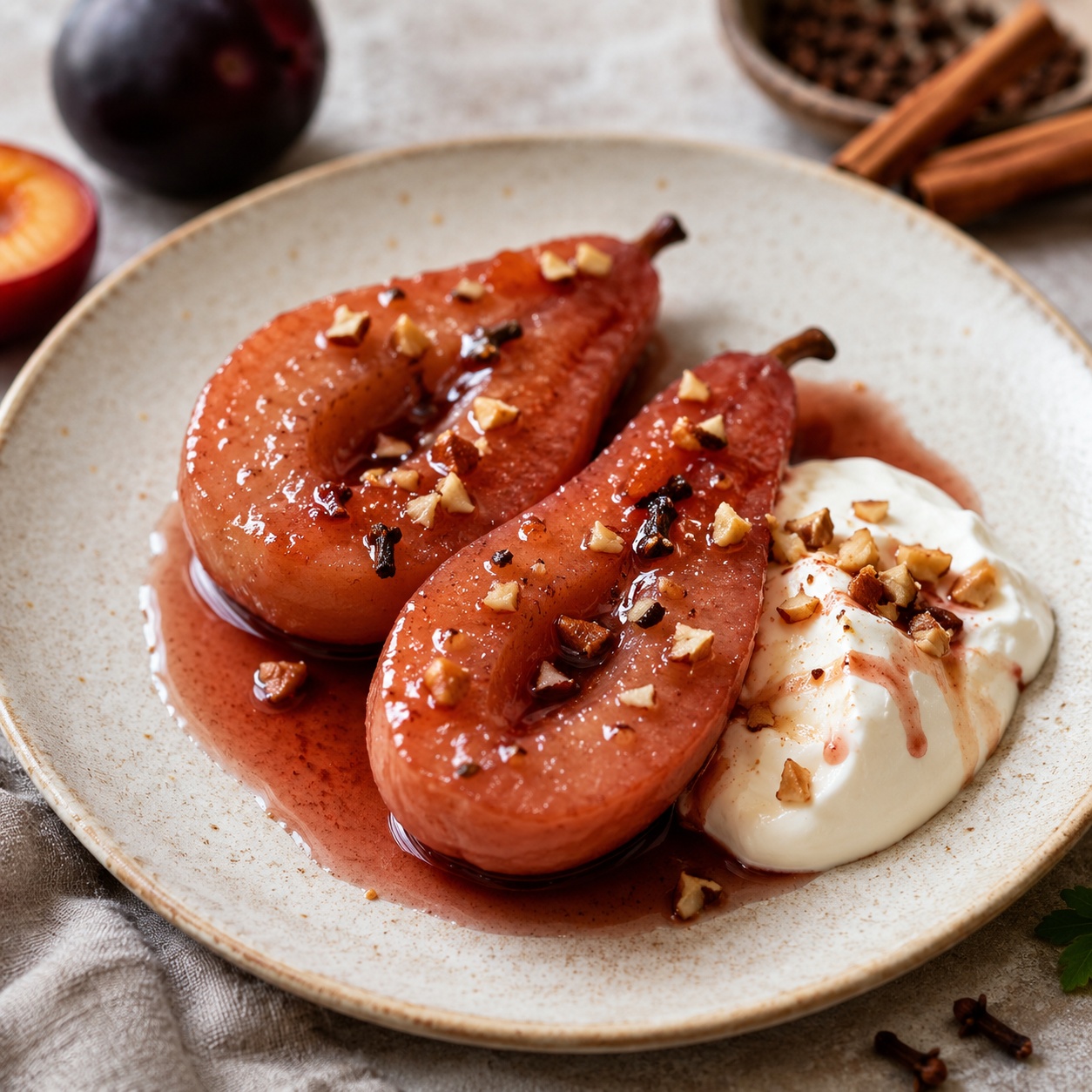
Ingredients for preparation (2 servings)
- 2 firm pears, e.g. Conference pears
- 150 ml sweet plum wine
- 80 ml water
- 1 teaspoon lemon juice
- 1 small cinnamon stick or 1/2 teaspoon ground cinnamon
- 2 cloves
- 1 thin slice of fresh ginger
- a pinch of salt
- 1 teaspoon honey
- 120 g thick Greek yogurt
- 1/2 teaspoon vanilla sugar
- 20 g walnuts
- 10 g butter
- a few mint leaves
Preparation
- Peel the pears, cut them in half and remove the cores. Drizzle the pears with lemon juice to prevent them from browning.
- Pour the plum wine and water into a small saucepan. Add the cinnamon, cloves, optionally the ginger and a pinch of salt.
- Heat everything over medium heat until it starts to simmer gently.
- Place the pear halves in the saucepan. Reduce the heat, partially cover with a lid and simmer the fruit for 12–18 minutes, depending on how firm they are. During cooking, turn the pears 2–3 times so they absorb the aroma of the wine and spices evenly. The pears should be soft but must not fall apart. The tip of a knife should enter the flesh with slight resistance.
- Carefully transfer the fruit to a plate. Remove the cloves, cinnamon and ginger from the liquid.
- Cook the remaining liquid uncovered for 5-8 minutes, until it thickens slightly. Do not reduce it too much, as the sweet wine may produce a syrup that is too heavy.
- Taste. If the pears were not sweet, add a teaspoon of honey. If the syrup is too sweet, add a few drops of lemon juice.
- Mix the yogurt with the vanilla. You can add half a teaspoon of honey.
- Toast the nuts in a dry frying pan. You can add a little butter to make them more aromatic.
- Arrange two pear halves on each plate. Add the yogurt cream and pour the warm plum-spiced syrup over the fruit.
Serve the dessert warm or at room temperature. It looks best on a flat plate: pear halves, a spoonful of cream alongside, with nuts and a thin drizzle of syrup on top. You can add a mint leaf or a little grated lemon zest. It is the perfect ending to a meal, especially after a light meat or poultry dish.