Malt Extract Production
We produce malt extracts with stable parameters, controlled colour and a distinctive flavour profile, intended for the food, brewing, baking and confectionery industries
Light malt extract
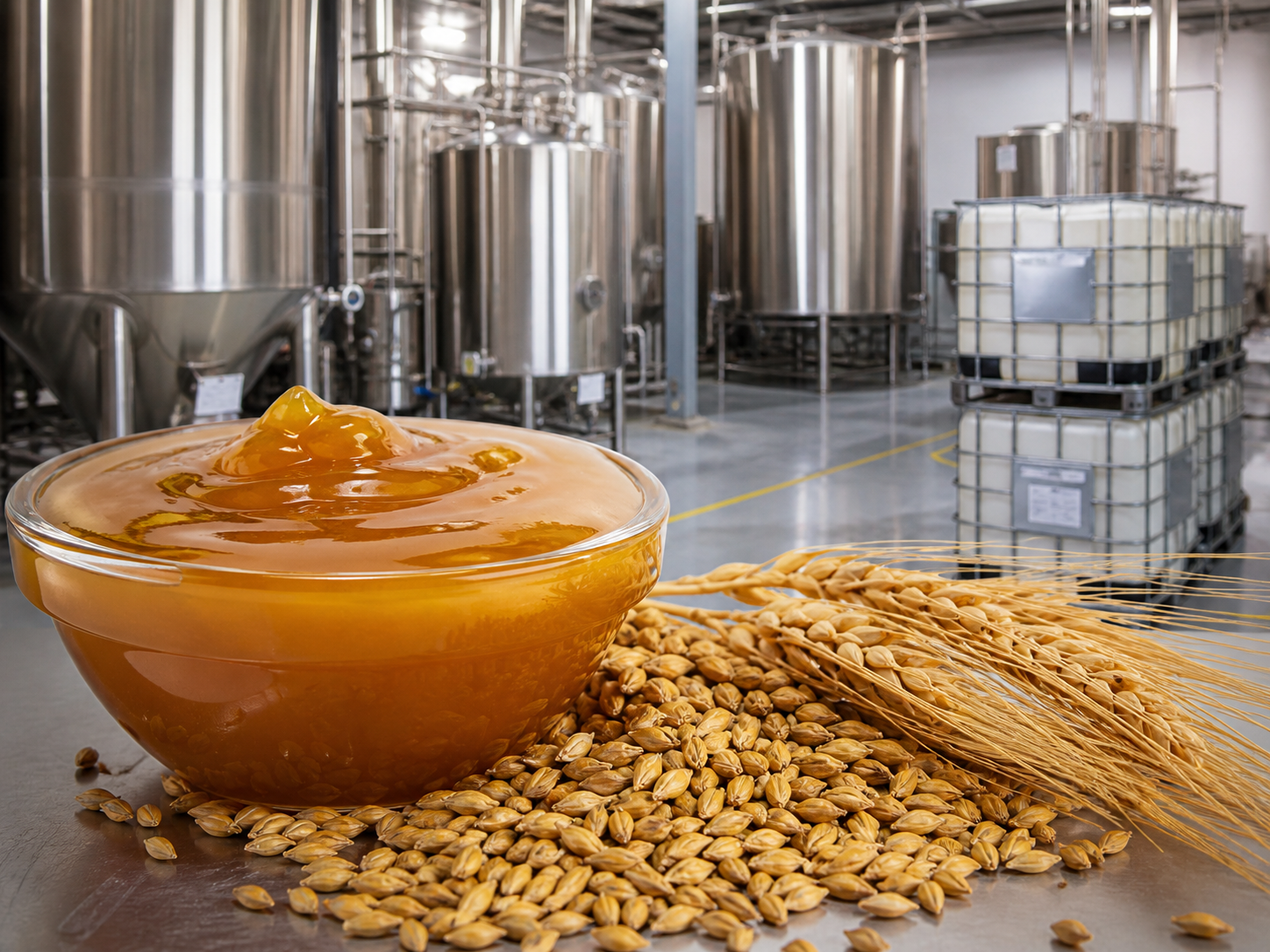
Light malt extract from VIN-KON S.A. is a high-quality product obtained from carefully selected cereal malt, primarily barley malt. It is widely used in the food, brewing, fermentation and baking industries, as well as in the confectionery and catering sectors. Thanks to its mild taste, natural sweetness, light colour and high extract content, it can be used as a technological ingredient and a natural flavour component.
VIN-KON S.A. is one of the leading producers of malt extract in Poland. It owes this position to many years of experience, a specialised team, advanced technological facilities and rigorous quality control carried out at every stage of production.
The production of light malt extract is based on the process of aqueous extraction of malt components, followed by filtration, clarification, concentration and product stabilisation. The aim of the process is to obtain an extract with consistent quality, a light colour, a characteristic malt aroma, natural sweetness and highly repeatable technological parameters.
Malt selection and control
The production of light malt extract begins with the careful selection of malt. The quality of the malt determines the colour, taste, aroma, sugar content, enzymatic activity and overall technological value of the finished extract. The production process uses malt that meets specified quality requirements and is free from contaminants, undesirable odours, mould and technological defects.
Already at the raw material reception stage, VIN-KON S.A. specialists control its parameters. These include moisture content, colour, aroma, degree of grain loosening, cleanliness, homogeneity and technological suitability. As a result, only raw material that allows for the production of light malt extract with high quality and stable properties is used.
Malt milling
After reception and inspection, the malt is sent for milling. Milling consists of mechanically crushing the grain in such a way as to open its structure and enable the effective extraction of soluble components. The aim is not to grind the malt into flour, but to obtain the appropriate grist fraction, which ensures good extraction and proper filtration.
In the case of light malt extract, the correct degree of milling is particularly important, as it affects mashing efficiency, wort clarity, filtration speed and the stability of the finished product. This process is controlled by experienced VIN-KON S.A. employees, who adjust the milling parameters to the type of malt and the assumed product specification.
Mashing, or the extraction of malt components
The most important stage in the production of light malt extract is mashing. The milled malt is mixed with water, and the process is then carried out within controlled temperature ranges. During mashing, enzymes naturally present in the malt break down starch into sugars and release compounds responsible for the product’s taste, aroma, colour and nutritional value.
The mashing process requires a high degree of precision. Temperature, time, the malt-to-water ratio, pH value and mixing intensity affect the composition of the extract, its viscosity, sweetness, colour and technological suitability. At VIN-KON S.A., this stage is carried out under the constant supervision of technologists, as this is when the basic profile of the light malt extract is formed.
The aim of mashing is to obtain malt wort with a light colour, clean aroma, mild sweetness and a high content of soluble components. This wort is an intermediate product for further filtration and concentration.
Malt wort filtration
After mashing is complete, the wort is separated from the insoluble parts of the malt. The filtration process is intended to obtain a clear liquid containing sugars, dextrins, amino acids, mineral salts and natural flavour compounds. The separated spent grain may be used as a by-product.
Filtration requires proper control, as a process that is too fast or too vigorous may impair the clarity and stability of the extract. At VIN-KON S.A., this stage is continuously monitored to ensure that the malt wort is clean, homogeneous and properly prepared for concentration.
In the case of light malt extract, it is particularly important to preserve a light, golden colour and a clean flavour profile, without burnt notes, excessive caramelisation or an overly dark shade.
Clarification and stabilisation of the intermediate product
After filtration, the wort may undergo additional clarification or stabilisation to remove fine suspended particles, improve homogeneity and prepare the product for concentration. At this stage, parameters such as pH, colour, turbidity, taste and smell are monitored.
The VIN-KON S.A. laboratory conducts ongoing tests of the intermediate product. This enables technologists to respond immediately to any deviations and maintain a high level of process repeatability.
Concentration of light malt extract
The concentration of malt wort involves the partial removal of water, usually under conditions that limit excessive thermal stress on the product. The aim is to obtain a thick extract with an intense malt flavour and stable technological parameters.
In the case of light malt extract, it is important that the concentration process does not cause excessive darkening of the product. It should retain its light, golden colour, mild malt aroma and natural sweetness. Excessively high temperatures or too long a processing time could lead to undesirable caramelisation, which is why the process is carried out under strict control.
Pasteurization, cooling and packaging
Once the appropriate extract has been obtained, thermal preservation follows. Pasteurization is intended to ensure microbiological safety and stability during storage. The extract is then cooled and transferred to storage tanks or sent directly for packaging.
Light malt extract can be packaged in barrels, canisters, intermediate bulk containers (IBCs) or other formats agreed with the customer. Before release, each batch undergoes quality control, including assessment of colour, viscosity, taste, aroma and stability.
Quality control of light malt extract
The high quality of light malt extract results from controls carried out at every stage of production. VIN-KON S.A. supervises the selection of malt, milling, mashing, filtration, clarification, concentration, preservation and packaging. The following parameters are examined, among others: colour, pH, viscosity, turbidity or clarity, taste and aroma, microbiological stability, batch repeatability and compliance with customer requirements.
Thanks to its experienced staff and excellently equipped laboratory, VIN-KON S.A. can offer light malt extract of high quality and stability, with a wide range of industrial applications.
Applications of light malt extract
Light malt extract is used in many industries, including brewing, baking, confectionery, the production of beverages, ice cream and desserts. It can also be used in food products, fermented products, sauces and marinades, functional foods, breakfast and cereal products. In brewing, it can be used as a source of fermentable sugars; in baking, it improves flavour, crust colour and dough fermentation; in confectionery, it enhances aroma and natural sweetness; and in beverage production, it imparts a mild cereal and malty character.
Dark malt extract
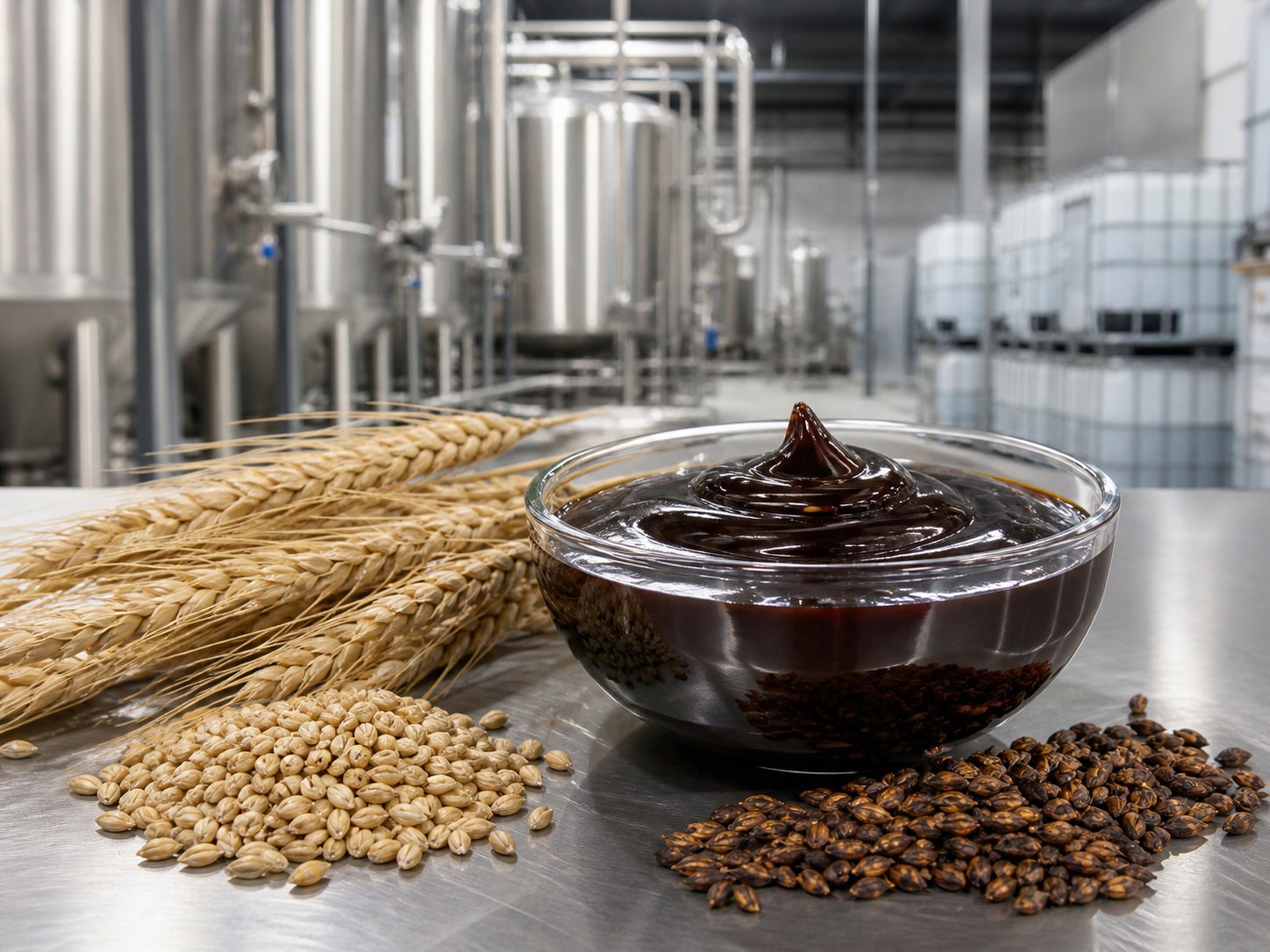
Dark malt extract from VIN-KON S.A. is a product with an intense colour, deep aroma and pronounced malty-caramel profile. It is made from carefully selected malts, including darker, caramel or specialty malts, which give the product a stronger flavour, darker colour and more distinctive character.
Like light extract, dark malt extract is produced under strict technological and laboratory control. As a leading producer of malt extracts in Poland, VIN-KON S.A. has the experience needed to obtain extracts with high batch-to-batch consistency and parameters tailored to the needs of the food industry.
Dark malt extract is particularly valued wherever a stronger colour, fuller flavour, caramel aroma, cereal notes and delicate roasted or toasted nuances, or the effect of naturally darkening a product, are required.
Selection of malts for the production of dark extract
The production of dark malt extract begins with careful raw material selection. Compared with light extract, greater importance is given to darker-coloured malts, caramel malts, Munich malts, colouring malts or other specialized malt components, depending on the desired product profile.
The choice of malt affects the colour, flavour, aroma, intensity of caramel and cereal notes, subtle roasted notes, as well as the final viscosity and sugar content. Our specialists inspect the raw material as early as upon receipt, paying attention to its purity, aroma, moisture, colour, uniformity and technological suitability.
As a result, dark malt extract from VIN-KON S.A. can be a consistent, stable product tailored to the requirements of various industries.
Milling and preparation of malt
Malt intended for the production of dark extract is milled in a way that enables the effective extraction of soluble components. As with light extract, an appropriate degree of milling should be used. Milling that is too coarse reduces efficiency, while milling that is too fine may hinder filtration.
At VIN-KON S.A., the milling process is controlled by employees with experience in malt processing. Proper preparation of the raw material makes it possible to obtain wort with the desired colour and flavour.
Mashing of dark malt
Mashing is a key stage in the production of dark malt extract. The milled malt is mixed with water, and the process is then carried out under controlled conditions. During mashing, sugars, dextrins, amino acids, mineral compounds, colour compounds and aromatic compounds pass into the solution.
In the case of dark extract, it is important to achieve a full, deep flavour profile. The process should bring out caramel, bready, cereal, slightly roasted or melanoidin notes from the malt, but without excessive bitterness, harshness or scorching.
VIN-KON S.A.’s technology makes it possible to carry out mashing in a way that gives the finished extract an intense colour, good solubility, stability and high industrial usability.
Filtration and separation of spent grain
After mashing, the malt wort is filtered. The aim is to separate the liquid from the insoluble parts of the malt. In the case of dark extracts, filtration requires particular attention, as darker malts may contribute more colour compounds, fine particles and components that affect turbidity.
At VIN-KON S.A., filtration is carried out in a way that preserves the desired colour and flavour intensity while obtaining a clean, homogeneous and stable product. After filtration, the wort is evaluated in the laboratory and technologically before being sent for further concentration.
Control of colour, flavour and aroma
In the production of dark malt extract, the control of colour and the sensory profile is of great importance. Depending on the customer’s specification, the product should have a deep dark amber, brown or almost black colour. At the same time, the flavour should be full, malty, caramel-like, cereal-like and harmonious.
The VIN-KON S.A. laboratory tests the parameters of the intermediate product and finished extract, while experienced specialists assess its organoleptic properties. This makes it possible to obtain a product that not only meets specific requirements expressed in numerical values, but also has the right flavour profile for use in brewing, baking, confectionery and beverage production.
Concentration of dark malt extract
After filtration, the malt wort is concentrated. Concentration is intended to increase the dry matter content and obtain a thick, stable extract. In the case of dark extract, this process should be carried out in a way that enhances the natural malt character without causing undesirable burnt notes.
Dark malt extract should retain an intense, deep colour, good viscosity, a natural aroma and stability. The concentration parameters are constantly monitored because they affect the final colour, taste, sugar content and suitability of the product for industrial formulations.
Pasteurisation and packaging
Once the required extract has been obtained, the product is pasteurised, cooled and packaged. Thermal preservation ensures microbiological safety and durability. The product may be packaged in barrels, canisters, pallet containers (IBC) or other formats adapted to the customer’s needs.
Each batch of dark malt extract from VIN-KON S.A. is tested in a laboratory before shipment. Colour, pH, viscosity, taste, odour, microbiological purity and compliance with the specification are examined.
Quality control of dark malt extract
The high quality of dark malt extract from VIN-KON S.A. is the result of a multi-stage control system. The company monitors both the raw material and the entire technological process. Particular importance is attached to assessing the colour and flavour profile, as these determine the use of the extract in many finished products.
The following are monitored, among other things: malt quality, degree of grinding, mashing process, wort clarity, colour, sugar content, pH, viscosity, taste and aroma, microbiological stability, batch repeatability.
Thanks to highly qualified specialists and extensive laboratory facilities, VIN-KON S.A. supplies dark malt extract with stable parameters, high quality and broad technological applicability.
Application of dark malt extract
Dark malt extract from VIN-KON S.A. is used wherever an intense colour, fuller taste and deeper malt aroma are required. It can be used in brewing, baking, confectionery, the production of sauces, beverages, desserts, ice cream and cereal products. It is ideal for dark and speciality beers, porters, stouts and caramel beers, dark bread, gingerbread and spiced baked goods, biscuits and confectionery products, malt beverages, sauces and marinades, breakfast products, desserts, ice cream and creams.
Light and dark malt extracts for industry
- Malt
- Colour
- Stability